Try Our FREE IPEDS Comparison Tool!

Categories
Blog

Integrated Student Records: How Higher Ed Unifies Student Data for Better Outcomes

Integrated Student Records: A Guide for Higher Ed Data Leaders

The student data already exists. It’s just scattered across a dozen systems that don’t talk to each other. Here’s how integrated student records fix that — and why they’ve become the foundation of modern student success.

Walk into almost any institution and you’ll find the same problem: a student’s story is split across the SIS, the LMS, the CRM, financial aid, advising notes, and a handful of spreadsheets nobody fully trusts. Each system holds a fragment. None holds the whole. When an advisor, a registrar, or a provost needs a complete picture of a learner, they end up stitching it together by hand — if they can get it at all.

Integrated student records solve that fragmentation by unifying data from every source into a single, reliable, and governed view of each student. This guide explains what integrated student records are, why they matter for retention and enrollment, the challenges of building them, and the practical steps higher education institutions take to get there.

What Are Integrated Student Records?

An integrated student record is a unified, continuously updated profile of a learner that pulls together data from across the institution’s systems — academic, financial, behavioral, and demographic — into one coherent view. Rather than living as disconnected entries in separate platforms, the data is harmonized so that a single record reflects the student’s complete journey.

This is distinct from a single student information system. An integrated data approach sits above and across your existing tools, drawing from each rather than replacing them. The goal is not another silo — it’s a connective layer that makes the systems you already own work together.

Integrated Student Records vs. a Student Information System (SIS)

A student information system manages core administrative functions: enrollment, registration, grades, and transcripts. It’s essential infrastructure, but it captures only part of the picture. Integrated student records combine SIS data with information from the learning management system, the CRM, financial aid, and other sources — producing a 360-degree view that no single SIS delivers on its own.

What Data Sources Feed an Integrated Student Record?

A genuinely integrated record draws from the full landscape of campus systems, typically including:

  • Student Information System (SIS): enrollment status, course history, grades, transcripts, and degree progress.
  • Learning Management System (LMS): engagement, assignment submission, participation, and early academic signals.
  • CRM and admissions platforms: recruitment, application, and communication history.
  • Financial aid and student accounts: aid packages, balances, and holds that influence persistence.
  • Advising, retention, and co-curricular systems: notes, interventions, and engagement beyond the classroom.

When these flow together, the institution gains a continuous, historical view of each learner — one that can be looked at day by day rather than as a single annual snapshot.

Why Integrated Student Records Matter for Higher Education

The case for unifying student data goes well beyond convenience. Fragmented data quietly undermines nearly every strategic priority an institution holds — from retention to enrollment to compliance.

Improving Retention and Student Success

The earliest signals that a student is struggling rarely show up in a single system. A dip in LMS engagement, a financial hold, and a missed advising appointment each look minor in isolation — but together they form a clear at-risk pattern. Integrated student records make those patterns visible early enough to act, allowing advisors and success teams to intervene before a student disengages entirely.

Powering Smarter Enrollment and Recruitment

Enrollment teams need to understand not just who applied, but how today’s prospects compare to the students who succeeded in the past. Connecting recruitment data to outcomes data turns guesswork into strategy. Our work on AI-powered enrollment platforms for colleges shows how unified data feeds predictive models that sharpen recruiting and yield decisions.

Reducing Reporting Burden and Manual Work

When data lives in disconnected systems, every report — IPEDS, Title IV, accreditation, board updates — becomes a manual reconciliation project. Integrated student records establish a single source of truth, dramatically cutting the time staff spend pulling, cleaning, and matching data by hand. Many institutions find this alone justifies the investment.

Protecting Student Privacy and Maintaining FERPA Compliance

Unifying data does not mean exposing it. A well-designed integrated record is governed: access is role-based, sensitive fields are protected, and the system is built to support FERPA compliance rather than complicate it. Strong data harmonization and governance ensure the right people see the right data — and no one sees what they shouldn’t.

The Challenges of Building Integrated Student Records

If integration were easy, every institution would already have it. The obstacles are real, but each is solvable with the right approach.

Data Silos and Incompatible Systems

Campus systems are rarely designed to share data. The SIS, LMS, and CRM each store information in their own structure, with their own definitions and identifiers. Bridging them requires both technical pipelines and a shared understanding of what the data means.

Inconsistent Definitions and Data Quality

Does “enrolled” mean the same thing in the SIS as it does in the financial aid system? Often, no. Different departments define the same terms differently, and small inconsistencies compound into untrustworthy reports. Harmonizing definitions across the institution is as much a governance challenge as a technical one.

Limited Internal Resources

Many institutions simply don’t have a large data engineering team. Building and maintaining integration pipelines, a data lake, and a governed model in-house is a heavy lift. This is where a managed approach — handled by a dedicated data team — lets institutions get integrated records without hiring an entire department.

How to Build Integrated Student Records: A Practical Framework

Creating integrated student records is a sequence of well-understood steps. The path looks consistent across institutions, even as the details vary.

Step 1: Collect Data From Every Source

The foundation is reliable data movement. Automated flows pull data from the SIS, LMS, CRM, financial aid, and other systems into a central location, ensuring information arrives consistently and on schedule. Datatelligent’s Data Flows automate this ingestion so source data lands reliably without manual exports.

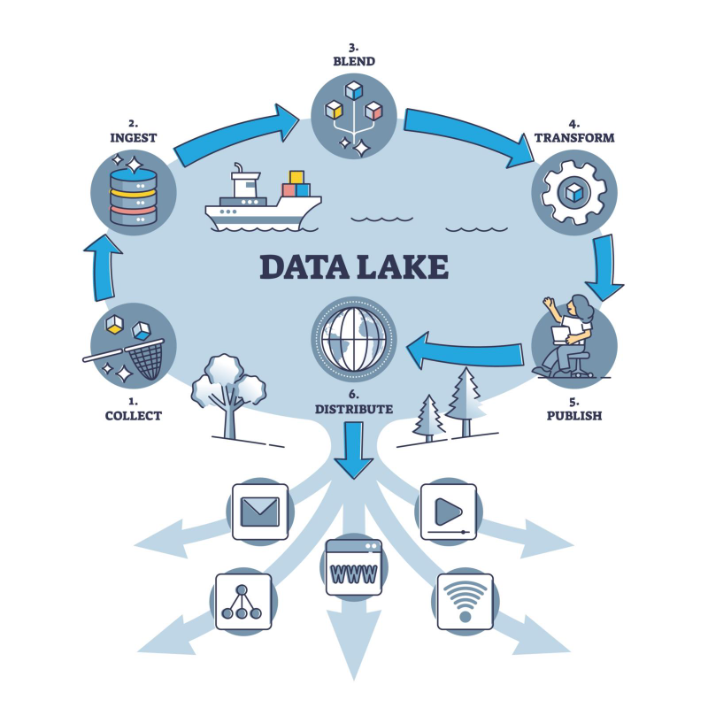
Step 2: Centralize in a Unified Data Lake

Once collected, data needs a home that can hold history and scale across sources. A unified data lake stores raw and processed data together, preserving the day-by-day history that makes trend analysis and longitudinal tracking possible.

Step 3: Harmonize and Govern the Data

Centralized data still isn’t integrated until it’s harmonized — aligned to consistent definitions, cleaned, deduplicated, and governed with appropriate access controls. This is the step that turns a pile of source data into a trustworthy, unified student record.

Step 4: Turn Records Into Insights

With clean, integrated records in place, institutions can layer on intelligent insights — dashboards, predictive models, and AI — to flag at-risk students, forecast enrollment, and measure outcomes across the entire student lifecycle.

From Fragmented Data to a Unified Student View

Integrated student records aren’t a single product you buy off a shelf — they’re the result of connecting collection, centralization, harmonization, and insight into one continuous system. Done well, they transform student data from a reporting headache into the institution’s most valuable strategic asset.

Datatelligent’s Fusion Platform for Higher Education was built for exactly this: collecting and harmonizing data from across your campus systems to deliver insights across the entire student lifecycle. If your institution is ready to move from scattered systems to a single, trusted view of every student, talk with our team about where to start.

Frequently Asked Questions About Integrated Student Records

What is the difference between integrated student records and a student information system?

A student information system manages core functions like enrollment, grades, and transcripts. Integrated student records combine SIS data with information from the LMS, CRM, financial aid, and other systems to create a single, complete view of each student that no individual SIS provides alone.

Do integrated student records replace our existing systems?

No. Integration sits across the systems you already own, drawing data from each rather than replacing them. Your SIS, LMS, and CRM stay in place; the integrated record connects them.

Are integrated student records FERPA compliant?

They can and should be. A properly designed integrated record uses role-based access and governance to protect sensitive data, supporting FERPA compliance rather than putting it at risk.

How long does it take to build integrated student records?

Timelines vary with the number of source systems and the state of your existing data, but a managed, phased approach lets institutions see value early — often starting with high-priority data sources and expanding from there.

Categories
Blog

Maximizing Admissions: The Ultimate Guide to AI-Powered Enrollment Platforms for Colleges 

The landscape of college admissions is shifting rapidly, and institutions are increasingly turning to advanced data solutions to stay competitive. At the forefront of this shift are ai-powered enrollment platforms for colleges. 

But what exactly are these platforms? In higher education, an AI-powered enrollment system is a comprehensive, intelligent data ecosystem that leverages machine learning and predictive analytics to streamline the entire student admissions journey—from the first inquiry to the last day of classes. Rather than simply acting as a digital filing cabinet, these platforms actively analyze applicant data, automate routine outreach, predict enrollment likelihood, and personalize the prospect experience at scale. 

Empowering the Admissions Office: Who Uses These Tools? 

To get the most out of predictive modeling and automation, it’s essential to understand who interacts with these platforms daily and how they can best be utilized. 

Admissions Counselors and Recruiters 

The primary users of ai-powered enrollment tools for admissions staff are the counselors on the front lines. Historically, these professionals have spent countless hours answering routine questions, manually logging emails, and sorting through unqualified leads. 

When implemented correctly, ai-driven enrollment platforms support admissions staff high-yield activities. By delegating the repetitive tasks (like initial chatbot conversations or automated document reminders) to the AI, counselors can dedicate their time to high-value interactions: conducting personal campus tours, having meaningful one-on-one conversations with prospective students, and closing the gap on yield rates. 

Enrollment Leadership and Deans 

For Directors of Admissions and VPs of Enrollment Management, these platforms act as the ultimate strategic dashboard. Leaders use the AI’s predictive modeling to forecast class sizes, track the health of the admissions funnel, and allocate marketing budgets more effectively. To get the best results, leadership should focus heavily on ai enrollment workflows customization, ensuring the AI’s scoring models are trained specifically on the institution’s historical enrollment patterns rather than generic industry averages. 

Finding the Right Fit for Every Campus 

Advanced capabilities aren’t just for large universities. In fact, some of the best ai-powered enrollment systems for small colleges provide immense value by acting as a force multiplier for leaner teams, allowing them to provide a highly personalized touch to their applicant pool without needing to double their headcount. 

Scale and Strategy: Small Colleges vs. Large Universities 

While the underlying technology is the same, how it’s deployed depends on the size of your campus. Both require AI to stay competitive, but for different strategic reasons: 

  • Small Colleges (The Force Multiplier): With leaner teams, small schools use AI to ensure no inquiry is missed. It automates administrative tasks so staff can focus on their greatest competitive advantage: deep, personal relationships with every applicant. 
  • Large Universities (The Data Navigator): For institutions managing massive applicant pools, AI provides essential triage. It scores thousands of files instantly and routes data across complex departments, ensuring high-yield prospects don’t get lost in the digital noise. 

Whether you are scaling a personal touch or managing a data deluge, specialized ai enrollment workflows customization ensures the platform serves your specific mission. 

The Key to Success: Eliminating Data Silos 

The greatest AI tool in the world is useless if it cannot communicate with the rest of your campus technology. Seamless ai-powered enrollment platforms integration with student information systems (SIS) is the critical bridge that makes these tools work. 

When your enrollment AI and your SIS speak the same language, admissions teams can ensure a single, accurate source of truth. As soon as an applicant submits an application, that information automatically updates in the SIS, triggering financial aid packaging, housing assignments, and course registration workflows without manual data entry. 

Giving Data a Voice with Datatelligent’s Fusion Platform 

For institutions looking to adopt a true higher-education-first data strategy, solving the complex web of integrations, dashboards, and automated information pulling can be daunting. That is where Datatelligent steps in. 

Our Fusion Platform is purpose-built for higher education, designed to break down departmental silos and turn raw admissions data into actionable, predictive insights. Whether you need to connect a fragmented SIS, build intuitive enrollment dashboards for your leadership team, or deploy custom machine learning models to predict student melt, the Fusion Platform handles the heavy lifting. 

We ensure that your enrollment workflows are highly customized and fully integrated, empowering your staff to focus on what they do best: building relationships with future students. 

Ready to transform your admissions process? Learn more about how our AI models and solutions can integrate with your enrollment ecosystem and drive your institution’s growth. 

Categories
Blog

Elevating the Full Student Success Lifecycle: A Holistic Data Strategy 

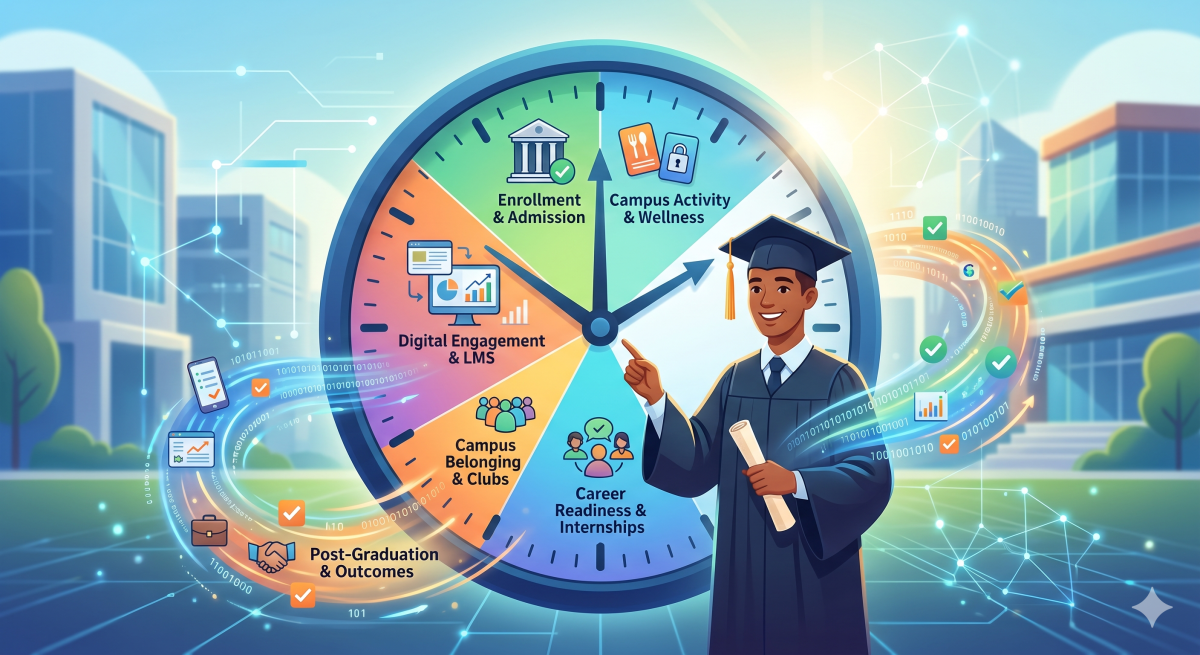
Higher education has traditionally measured student success through a narrow lens of GPAs, credit hours, and graduation rates. However, modern institutions recognize that a student’s journey is far more complex, encompassing their physical environment, mental well-being, campus engagement, and eventual career readiness. To truly support students from their first day on campus to their transition into the workforce, institutions must look beyond traditional academic metrics and embrace a holistic, campus-wide data strategy. 

The Foundation: Enrollment, Aid, and Retention 

While expanding our view of the student lifecycle is critical, it must be built on a solid baseline of institutional health. The foundational triad of enrollment strategies, financial aid distribution, and retention rates dictates much of an institution’s operational capability. Connecting these core systems helps uncover which student populations might be financially vulnerable long before they decide to leave. 

For a comprehensive breakdown of how bringing these specific financial and demographic metrics together can reveal the true ROI of your institutional investments, check out our recent post on Linking Enrollment, Aid, and Retention. Once that baseline is established, campus leaders can shift their focus to the daily behavioral signals that define the broader student experience. 

Proactive Wellness Checks: Safeguarding Through Campus Activity 

One of the most vital, yet complex, areas of the student lifecycle is physical and mental well-being. Often, when a student begins to struggle, the first signs aren’t academic—they are behavioral. By thoughtfully leveraging campus infrastructure data, institutions can facilitate proactive wellness checks to support their student body. 

This involves monitoring subtle, campus-wide shifts, such as a sudden cessation of dining hall meal swipes or a prolonged absence of residence hall badge-ins. A sudden change in these daily routines can serve as a gentle early-warning signal that a student is isolating themselves or experiencing distress. 

The absolute most critical component of this strategy is data privacy and ethical stewardship. This behavioral data must be securely managed—kept strictly private and anonymized within the institution’s architecture. It should only ever be de-anonymized and accessed when absolutely necessary to trigger a secure alert to specialized student life professionals or counselors who can step in to offer targeted support. 

Digital Engagement: Navigating the LMS Landscape 

A student’s digital footprint provides real-time insights into their academic momentum. Moving beyond simple midterm grades, institutions can analyze Learning Management System (LMS) engagement to gauge academic health. Metrics such as login frequency, time spent reviewing course materials, and participation in discussion boards can identify students who might be quietly falling behind. When these digital engagement metrics are synthesized with advising records, faculty can intervene weeks before a struggling student fails a major assignment, offering tutoring or academic coaching exactly when it will make the most impact. 

Extracurricular Connection: The Belonging Metric 

Students who feel a sense of belonging on campus are overwhelmingly more likely to succeed. Tracking participation in intramural sports, registered student organizations, and Greek life can help institutions measure this elusive “belonging” metric. If data shows that a specific cohort of first-year students hasn’t engaged with any campus organizations by week six, student affairs teams can launch targeted outreach campaigns, inviting them to specific events or clubs that align with their initial intake interests. 

Career Readiness: The Post-Graduation Transition 

The final stage of the student success lifecycle isn’t graduation—it’s the successful transition into the professional world. Modern student success tracking should encompass career center engagement, internship placement rates, and alumni networking activities. By analyzing which campus organizations, resume workshops, or early-career interventions yield the highest post-graduation placement rates, institutions can continuously refine their programming to better align with actual workforce outcomes. 

Unifying the Lifecycle with The Fusion Platform 

The greatest barrier to mapping this complete lifecycle isn’t a lack of data—it’s the presence of departmental silos. Student affairs, academic advising, and the career center often operate on entirely different, disconnected software systems. 

To bridge these gaps, institutions require an advanced institutional data lake capable of handling complex, multi-source inputs. By leveraging The Fusion Platform, universities can securely aggregate SIS records, LMS activity, and campus infrastructure data into one cohesive environment. This centralized approach empowers campus leaders with AI-driven insights, turning fragmented daily interactions into a comprehensive, actionable view of student well-being and success. 

Advancing data advocacy in higher education requires ongoing conversation, ethical boundaries, and technological commitment. For more ongoing discussions on how institutional intelligence is transforming the student experience, tune into the Data Stakes podcast, where the conversation continues on how to make campus data work for the students it represents. 

Categories
Blog

Demystifying the AI Data Lake: A Guide to Generative AI Data Lake Implementation 

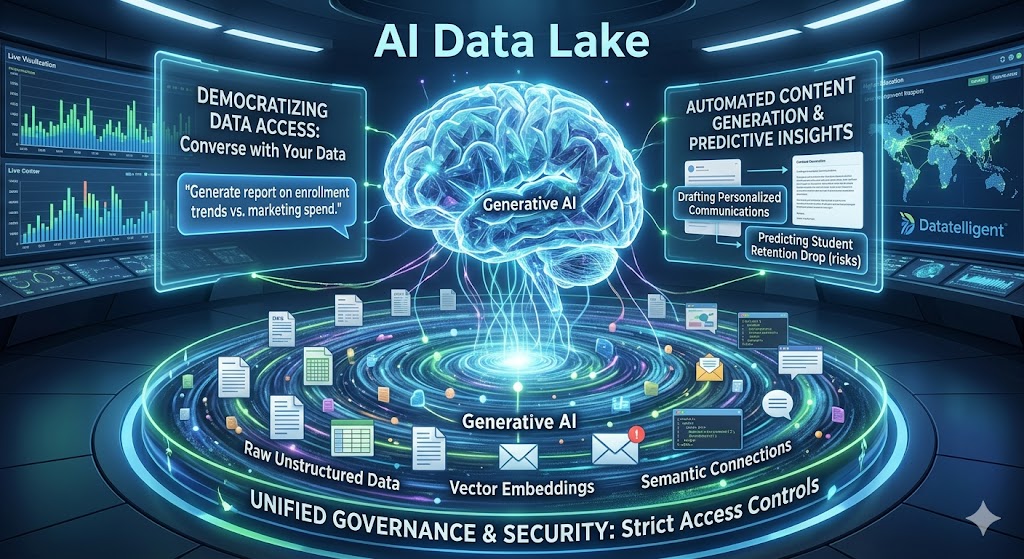
For years, organizations have been focused on simply collecting and storing as much information as possible. The traditional data lake served this purpose well, acting as a massive repository for raw, unstructured data. However, the landscape has shifted. Today, it is no longer enough to merely hoard data; organizations must be able to actively converse with it. We are moving from passive storage toward intelligent, interactive ecosystems, making the leap from traditional data management to dynamic, AI-driven environments. 

What is an AI Data Lake? 

An ai data lake represents the next vital evolution in enterprise data architecture. While a standard data lake holds vast amounts of structured, semi-structured, and unstructured data in its native format, it often requires heavy manual intervention—wrangling, cleaning, and structuring—before that data can be useful. 

In contrast, an ai data lake is specifically architected from the ground up to support, train, and deploy artificial intelligence and machine learning models. It includes built-in, automated data preparation, intelligent metadata tagging, and unified governance. This foundational architecture ensures that AI algorithms can seamlessly access, interpret, and learn from the data without the bottleneck of extensive manual engineering. 

The Shift to Generative AI Data Lake Implementation 

Understanding the foundation is just the first step. The true breakthrough comes with generative ai data lake implementation. This process involves integrating Large Language Models (LLMs) and generative AI frameworks directly into the data lake architecture. 

Why is this shift so critical? Historically, extracting insights required data scientists to write complex SQL queries or build custom dashboards. A successful generative ai data lake implementation flips this paradigm. It allows users across an entire organization to use natural language to query, summarize, and generate novel insights directly from the raw data pool. It transforms a static repository of historical facts into a dynamic, conversational knowledge base that can answer complex questions in real time. 

Core Components of a Successful Implementation 

To make this conversational capability a reality, a few key technical components must be in place: 

  • Vector Databases & Embeddings: Generative models need to understand context, not just keywords. By converting text and data into vector embeddings, the system can understand the semantic relationship between different pieces of information across the entire lake. 
  • Data Governance & Security: With powerful search and generation capabilities, strict access controls are non-negotiable. A robust implementation ensures that generative AI only surfaces data that a specific user is authorized to view, maintaining compliance and data privacy. 

End Use Cases and Strategic Goals 

Organizations undertaking this implementation are driving toward several transformative goals: 

  • Democratizing Data Access: The primary goal of an ai data lake is to allow non-technical stakeholders to interact with complex datasets. For example, a marketing or admissions director could ask their internal AI, “Generate a report on enrollment trends over the last five years compared to our marketing spend,” and receive a comprehensive, ready-to-publish analysis in seconds. 
  • Automated Content & Report Generation: Instead of starting from scratch, teams can use the generative capabilities to automatically draft personalized communications, generate financial summaries, or even write predictive grant proposals based on historical institutional data. 
  • Advanced Predictive Insights: By feeding unstructured data—such as student feedback forms, emails, and forum posts—into the generative AI, organizations can identify patterns and predict risks, such as student retention drops, long before they become critical issues. 

How Datatelligent Empowers Higher Education 

In higher education, data is often trapped in restrictive silos. Student Information Systems (SIS), Learning Management Systems (LMS), and financial records rarely speak to one another natively, holding institutions back from seeing the complete picture of their campus ecosystem. 

Datatelligent steps in to solve this exact problem by designing and deploying custom data architectures tailored specifically for the unique needs of colleges and universities. By helping institutions execute a generative ai data lake implementation, Datatelligent breaks down these traditional silos. This allows universities to leverage generative AI to boost student success rates, optimize campus operations, and drive targeted enrollment strategies. 

By building secure, scalable, and intelligent data environments that drive true academic and operational innovation, it is easy to see why people see Datatelligent as a university research partner

Categories
Blog Uncategorized

Beyond the Chatbot Hype: Implementing Effective AI for Higher Education Strategic Planning 

Artificial Intelligence is currently the loudest topic in higher education boardrooms and IT departments. The promise is immense: predictive modeling for student retention, personalized learning pathways, and streamlined administrative operations. 

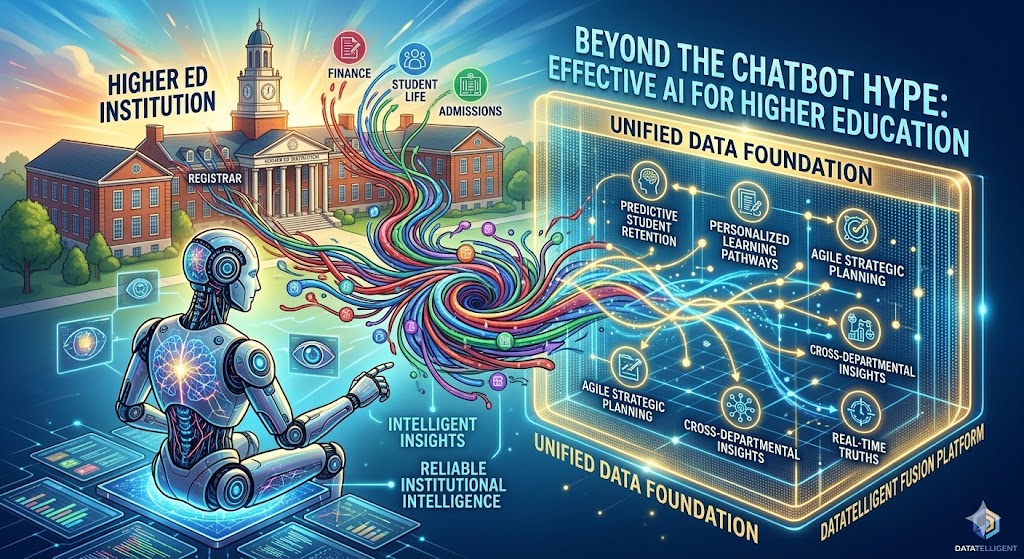
However, the rush to adopt “AI for higher education” is leading many institutions into a common trap. They are prioritizing the flashy interface—the AI chatbot—over the foundational data infrastructure required to make that tool actually intelligent. 

This post explores why the current common approach to institutional AI often fails to deliver ROI and how Datatelligent takes a data-first approach, ensuring that when you do apply AI, it provides deep, actionable value rather than surface-level answers. 

The Current Landscape: The Flawed “Magic Box” Approach 

Right now, the most common AI technique being piloted by colleges and universities is the generative AI chatbot designed for “general level access” to institutional knowledge. 

The typical scenario looks like this: An institution wants an internal tool where administrators can ask questions like, “How does our current engineering enrollment impact our 5-year housing revenue projection?” 

To achieve this, IT teams hastily assemble a vector database filled with dozens of PDFs—strategic plans, recent enrollment reports, and disparate spreadsheets—and sit a Large Language Model (LLM) on top of it. 

Why General Access Chatbots Fail in Siloed Environments 

The problem isn’t the AI model; it’s the data diet it’s being fed. 

Most higher education institutions still suffer from deeply entrenched data silos. The Registrar’s data doesn’t speak fluently to Finance’s data, which is completely disconnected from Student Life data. 

When you implement a “general access” chatbot over fragmented data, you don’t get a unified intelligence; you get a confident hallucination. The chatbot might view specific parts of the data perfectly well, but it lacks the connective tissue to understand the relationships between those parts. It cannot accurately answer complex, cross-departmental questions because it is blind to the complete picture. 

The result is a shiny new tool that users quickly distrust because its answers are incomplete, lacks context, or are flat-out wrong. 

The Datatelligent Difference: A Foundation-First Strategy 

At DataTelligent, we believe that AI is only as good as the data infrastructure it sits upon. You cannot solve a data integration problem with an AI application. 

While the end result of working with Datatelligent’s Fusion Platform may well include advanced dashboards or chatbot capabilities, we don’t start there. We start by solving the root problem that plagues higher ed analytics: data unification. 

Creating Intelligent Insights Within the Data Lake 

Our approach begins with the Datatelligent Fusion Platform. Instead of letting an AI loosely browse disconnected folders, we proactively combine your various data sources—SIS, LMS, Finance, HR—into our pre-made, higher-ed-specific datasets. 

We do the heavy lifting of cleaning, normalizing, and relating the data before the AI ever touches it. We are essentially creating “intelligent insights” directly within the data lake itself by structuring the data in a way that already highlights relationships and trends. 

Because we organize the data based on proven models for higher education, it becomes significantly easier for any AI tool sitting on top to understand the context and pull out real value. By preparing the environment first, we ensure the AI is generating reliable institutional intelligence, not just summarizing PDFs. 

Agile Data for Strategic Planning: Going Deeper Than “General AI” 

Strategic planning in modern higher education requires agility—the ability to pivot quickly based on real-time truths. This requires more than just “General AI.” 

General AI, like off-the-shelf tools or poorly implemented internal bots, can give you generic advice on best practices. But they cannot tell you how your specific institution should react to a sudden shift in applicant demographics combined with a new state funding model. 

Ensuring the AI Has the Correct Data to Work With 

Agile data means having data that is ready for analysis the moment a question is asked. By using the DataTelligent Fusion Platform to pre-integrate your data sources, you empower AI tools to go deeper. 

Instead of asking general questions, you can use AI to stress-test specific strategic scenarios against your actual historical data across all departments. You can move from reactive reporting to proactive, predictive strategy because the AI has the correct, contextualized data required to perform complex reasoning. 

True strategic advantage doesn’t come from having a chatbot; it comes from having a unified data foundation that makes your AI tools genuinely intelligent. 

Check out our one-pager on our AI Workshop for more info on how Datatelligent makes AI better for higher education institutions.

Categories
Blog

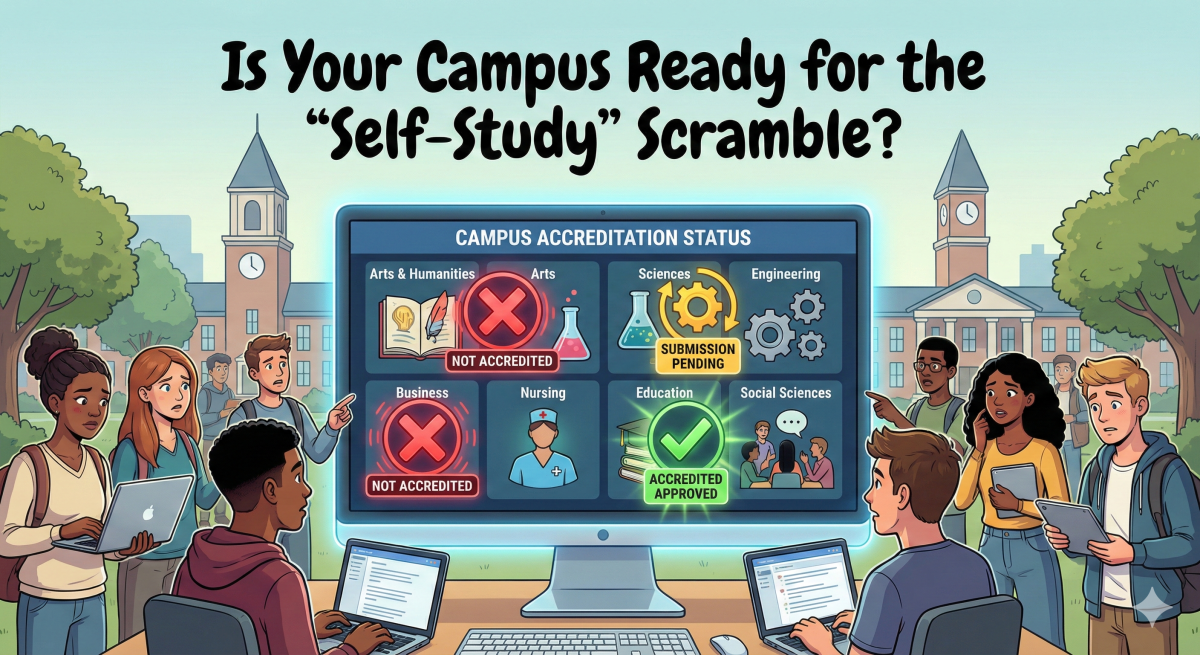
Is Your Campus Ready for the “Self-Study” Scramble? 

For many Institutional Effectiveness (IE) and Institutional Research (IR) teams, the word “accreditation” triggers a familiar sense of dread. It signals the start of the “Great Data Scramble”—a frantic, months-long process of emailing department heads, hunting down spreadsheets, and piecing together fragmented evidence to prove your institution is meeting its standards. 

While accreditation is meant to foster continuous improvement, the process of reporting often feels like a massive distraction. The sheer burden of data collection—pulling numbers from your Student Information System (SIS), Learning Management System (LMS), and financial software—can paralyze a team. 

If you are spending 80% of your time collecting data and only 20% analyzing it, the balance is wrong. It’s time to talk about why the old way of reporting is broken and how Unified Data offers a path out of the weeds. 

The Hidden Cost of the “Template Trap” 

The most common tool for accreditation reporting is still, unfortunately, the static spreadsheet. You likely have a folder full of “Common Data Set” templates or custom Excel files that you email to the Registrar, the Provost, and the CFO, hoping they fill them out correctly. 

While these templates provide a structure, they create three major burdens: 

The Version Control Nightmare 

We have all seen it: Enrollment_Data_Final_v3_ACTUAL.xlsx. When you rely on emailed templates, you aren’t managing data; you are managing files. Reconciling conflicting numbers from different stakeholders becomes a full-time job. 

The “Snapshot” Fallacy 

Accreditation bodies like HLC, SACSCOC, and NECHE increasingly demand evidence of continuous improvement. A static template captures a snapshot of your institution from six months ago. By the time the visiting team arrives, that data is stale, making it difficult to answer real-time questions about student success trends. 

Moving From “Collection” to “Connection” 

To lift the burden of accreditation, institutions need to stop asking “Who has this spreadsheet?” and start asking “How does our data flow?” 

The solution lies in Unified Data. Instead of manually harvesting data every ten years (or every reporting cycle), modern institutions are building “always-on” data lakes. When your data is unified, accreditation metrics—like retention rates, faculty credentials, and financial health ratios—are calculated automatically and continuously. 

How Datatelligent Automates the Evidence Room 

At Datatelligent, we believe that compliance shouldn’t come at the cost of your sanity. That’s why we built the Fusion Platform to automate the heavy lifting of higher ed data. 

Automate Ingestion with Fusion Flow 

The biggest bottleneck in accreditation is getting the data out of your siloed systems. Fusion Flow orchestrates the collection of data from every source—your SIS, CRM, LMS, and more—and automates the ingestion into a centralized Data Lake. No more manual exports; the data is simply there, ready for analysis. 

Visualizing Compliance with Fusion Vision 

Once your data is harmonized, Fusion Vision turns that raw information into intelligent insights. Imagine an “Accreditation Dashboard” that updates daily, allowing you to monitor your Key Performance Indicators (KPIs) year-round. When the self-study rolls around, you don’t need to scramble for evidence; you just point to the dashboard. 

Free Tools to Get Started 

We know that unified data is a journey. To help you benchmark your current standing, we offer resources like our Free IPEDS Comparison Tool. It’s a great example of how visualizing public data can save you hours of manual cross-referencing. 

Turn Compliance into Strategy 

Accreditation shouldn’t be a burden you survive; it should be an opportunity to thrive. By shifting from manual templates to a unified data platform, you can give your team the time they need to focus on what matters most: using that data to drive student success. 

Explore the Fusion Platform and see how we unify your data ecosystem. 

Categories
Blog Uncategorized

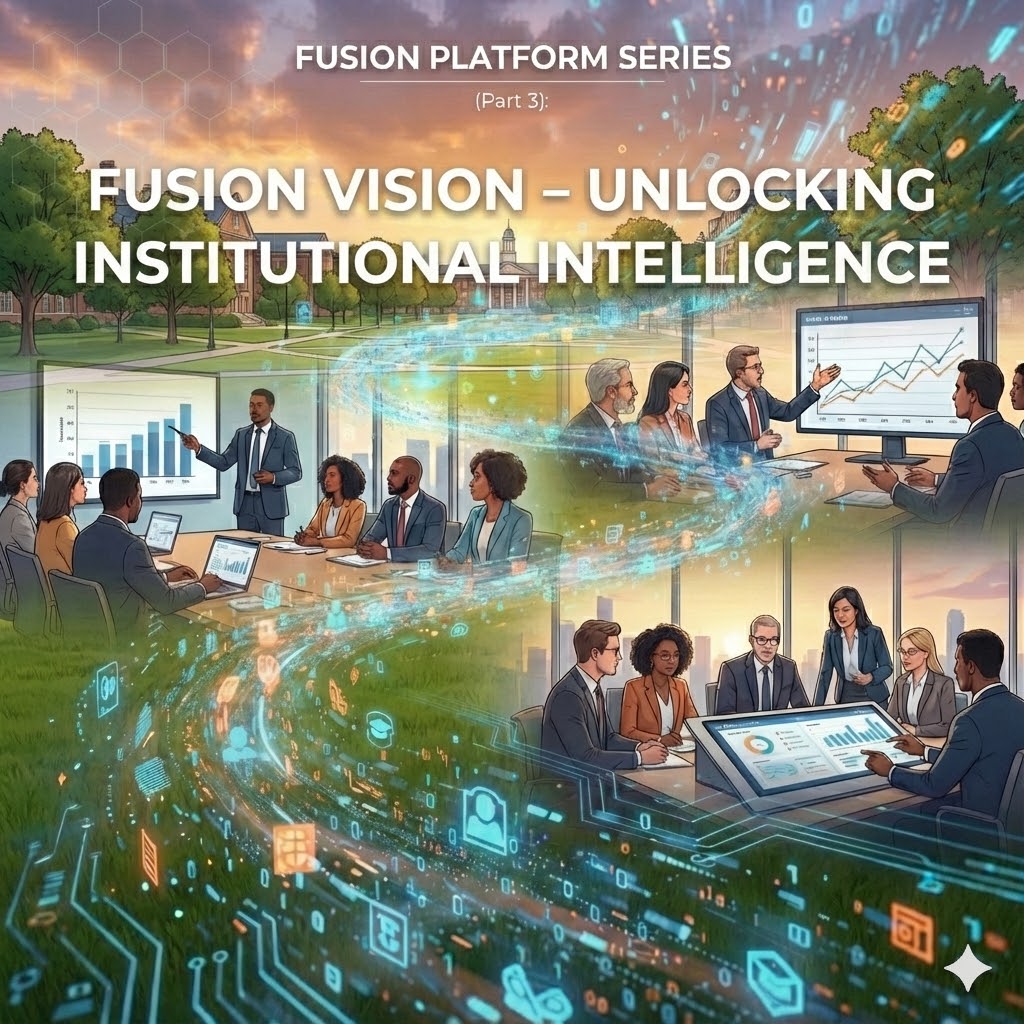
Fusion Platform Series (Part 3): Unlocking Institutional Intelligence with Fusion Vision

Welcome to the finale of our Fusion Platform blog series.

In Part 1, we built the pipelines with Data Flows. In Part 2, we centralized and organized that information into the Data Lake using our preset higher education models.

Now, we arrive at the moment where all that infrastructure pays off. It’s time to turn raw data into strategic power.

Welcome to Fusion Vision.


Moving Beyond Static Reporting to Dynamic Higher Education Analytics

For many institutional research professionals, the job often feels like being a “report factory.” You spend weeks building a static report, and by the time it reaches leadership, the data is stale, or they have a follow-up question that requires another week of work.

Fusion Vision changes this dynamic. Because we have already standardized and modeled the data in the Data Lake (Step 2), we can now instantly layer powerful visualization tools on top of it.

This isn’t just about making pretty charts; it’s about speed and accessibility. Fusion Vision allows you to move your data effortlessly into interactive KPI dashboards that track enrollment, retention, and student success in real-time.


Democratizing Data: Insights for Everyone

The true goal of the Fusion Platform is to break down the walls around data. Historically, only a few people with SQL skills could access the “source of truth.”

With Fusion Vision, we democratize access. Whether it’s the Provost, the Dean of Student Affairs, or the Financial Aid office, stakeholders get secure access to the insights they need without having to submit a ticket to IT.

The Power of AI and Chatbots in Higher Ed

One of the most exciting additions to Fusion Vision is the integration of AI-driven Chatbots.

Imagine a Dean asking a plain-language question like, “What is the retention rate for first-generation students in the College of Arts & Sciences?” and getting an immediate, accurate answer visualized in a chart.

Because our preset models in the Data Lake have already defined the relationships between your data points, our AI tools can accurately interpret these questions. This empowers decision-makers to self-serve, freeing up the Institutional Research team to focus on complex, high-level strategic analysis rather than ad-hoc queries.


Survival of the Fittest: Why Colleges Need Intelligent Insights

In today’s competitive landscape, higher education institutions are under immense pressure. Enrollment cliffs, budget constraints, and retention challenges mean that colleges cannot afford to fly blind.

Fusion Vision delivers the intelligent analytics solutions required not just to operate, but to survive and thrive. By connecting the dots between disparate data sources—from the LMS to the ERP—you can spot at-risk students earlier, optimize financial aid distribution, and predict enrollment trends with greater accuracy.


The Complete Fusion Journey

We hope you’ve enjoyed this series on the Datatelligent Fusion Platform.

  1. Data Flows ensure your data moves securely and automatically.
  2. The Data Lake organizes and models it for higher education.
  3. Fusion Vision delivers the insights, dashboards, and AI tools that drive action.

Ready to see how Fusion Vision can transform your institution’s data culture? Explore our Analytic Solutions here.

Categories
Blog

Fusion Platform Series (Part 2): The Power of the Higher Education Data Lake 

In Part 1 of our Fusion Platform series, we discussed Data Flows—the critical pipelines that automate the extraction of data from your Student Information System (SIS), Learning Management System (LMS), and other campus sources. 

But once that data is flowing, where does it go? It needs a destination that is more scalable than a spreadsheet and more flexible than a traditional warehouse. 

Welcome to step two of the Fusion Platform: The Datatelligent Data Lake

Shutterstock 

Centralizing Your Institutional Research Data Management 

For many universities, data storage is just as fragmented as data collection. You might have financial data in one server, student success metrics in another, and alumni records in a third. This fragmentation makes “big picture” analysis nearly impossible. 

The Datatelligent Data Lake acts as the central reservoir for all this incoming information. By directing your Data Flows into a single, unified environment, we eliminate data silos. This consolidation is the first requisite for advanced higher education data analytics, allowing you to see the interplay between a student’s financial aid status, their LMS engagement, and their retention likelihood. 

Preset Models: Transforming Raw Data into Strategic Assets 

A common fear for research professionals is that a “Data Lake” will turn into a “Data Swamp”—a messy dumping ground where information gets lost. 

The Fusion Platform prevents this by utilizing preset higher education data models. When your data flows from your ERP or CRM into our Data Lake, it doesn’t just sit there in a raw, unusable state. It flows into pre-built, standardized structures designed specifically for the unique complexities of the higher education environment. 

These models automatically organize your data, saving your team hundreds of hours of manual engineering. It ensures that data from disparate sources is not just stored, but harmonized, ready for complex querying. 

Unifying Student Data Sources for a Single Source of Truth 

The true magic happens when these sources combine. In the Data Lake, your LMS engagement data can finally “talk” to your SIS demographic data. 

  • Integration: We merge records to create a 360-degree view of the student. 
  • Scalability: Unlike legacy storage, our Data Lake scales infinitely as you add more history or new software tools. 
  • Speed: With the data pre-modeled, you cut down the “time-to-insight” significantly. 

Preparing for the Future: Analytics and Dashboards 

Think of the Data Lake as the foundation of a house. You cannot build the beautiful, functional rooms (dashboards and visual reports) without a solid concrete slab. 

By consolidating and modeling your data here, you are prepping your institution for the final and most exciting step of the Fusion Platform: Fusion Vision. The work we do in the Data Lake today allows us to easily query data and pull it into stunning, actionable dashboards later—which is exactly what we will cover in the next blog post. 

Dive Deeper into Data Lakes 

Want to understand the technical benefits and security features of this architecture? We have a comprehensive resource that goes into the fine details. Read our Deep Dive: Unlock the Potential of Your Data with a Data Lake 

Stay tuned for Part 3, where we will discuss how to visualize this data to drive decision-making. 

Categories
Blog

Fusion Platform Series (Part 1): Mastering Your Higher Education Data Flow

Management 

For years, we at Datatelligent have been dedicated to building a platform that truly solves the complex data challenges facing higher education. We’re thrilled to introduce a new blog series that will walk you through each component of our powerful Fusion Platform

We begin with the foundational first step, the very heartbeat of the platform: Data Flows

What Are Data Flows and Why Do They Matter? 

In any institution, but especially in higher education, data is being generated constantly from a dozen different places. The challenge isn’t a lack of data; it’s that the data is siloed, messy, and difficult to harness. 

Data Flows are the solution. They are the engine powering the seamless movement of data from all your essential higher education systems—from the Student Information System (SIS) to the Learning Management System (LMS) and your Customer Relationship Management (CRM) platforms. This data is then channeled into one centralized, secure location. 

Solving the Core Challenge: Higher Education Data Integration 

For too long, institutional research professionals have been burdened with the time-consuming, frustrating task of “manual data wrangling.” You know the drill: exporting spreadsheets, cleaning columns, and trying to manually stitch together reports from systems that were never designed to talk to each other. This process is not just inefficient; it’s prone to errors that can lead to flawed insights. 

From Manual Wrangling to Automated Student Data Pipelines 

The Fusion Platform’s Data Flows eliminate this problem entirely. We connect your disparate systems through secure, automated pipelines

This means you and your team are no longer spending your valuable time as data janitors. Instead, the data is automatically extracted, standardized, and loaded, freeing you to focus on what you do best: analysis and generating insights that drive student and institutional success. 

Meeting Your University Where It Is 

We understand that every institution has a unique technology stack. Data Flows are designed to connect with the systems you already have. Whether it’s data from across the student lifecycle, financial aid, or alumni relations, our platform meets you where you are, ensuring that all relevant data collection areas are integrated. 

The Ultimate Benefit: A Single Source of Truth for Institutional Research 

When your data is automatically managed and centralized, the result is transformative. You get a single, trusted source of truth

No more conflicting reports from different departments. No more questioning if you have the latest numbers. Data Flows ensure that your entire institution operates from one complete, accurate, and timely set of data. 

For a research professional, this is the bedrock of strategic decision-making. It enables you to deliver the timely, accurate insights your leadership needs with confidence. To see how this component works in more detail, you can learn all about our Data Flows for Higher Education solution. 

What’s Next? The Data Lake 

So, where do all these secure, automated data flows lead? 

They feed the next critical component of the Fusion Platform: the Data Lake. This is the central repository where your newly integrated, clean, and analysis-ready data is stored. 

In next week’s blog, we’ll dive into the Data Lake and explore how it serves as the foundation for powerful analytics, reporting, and predictive modeling. 

Stay tuned! 

Categories
Blog

Bigger, Bolder, and Brighter: Announcing the New Datatelligent! 

If you’ve visited datatelligent.ai recently, you might have noticed things look a little different. And you’re right! We’re thrilled to officially unveil our complete rebrand, complete with a new homepage, streamlined menus, and a refocused services page. 

This isn’t just a new coat of paint. This rebrand represents a major evolution for us and a doubling-down on our core mission. While we still proudly serve our partners in the non-profit sector, we are sharpening our focus to become the premier data and AI partner for Higher Education

Introducing The Fusion Platform 

A huge part of this new chapter is the launch of our core platform’s new name: The Fusion Platform. It’s the engine that drives everything we do, and we’ve broken it down into two distinct areas: 

  1. Fusion Flow: This is where the magic begins. Fusion Flow is all about taking the complex, siloed data sources from a college or university and seamlessly merging them into a unified data lake. We then harmonize this data with our prebuilt datasets, making it clean, accessible, and ready for insights. We leverage our powerful partnership with Snowflake to handle the heavy lifting, ensuring your data is secure, fast, and scalable. 
  1. Fusion Vision: Once your data is in order, Fusion Vision is how we bring it to life. This is where we focus on Intelligent Insights that empower measurable outcomes. Built specifically for higher education, our Intelligent Insights connect every stage of the student lifecycle—from Attract to Thrive. This isn’t just about showing static data; it’s about transforming your harmonized data into a deeper understanding of what’s happening. By combining advanced analytics, machine learning, and generative AI, we help you uncover patterns, predict outcomes, and take decisive action to improve both student success and institutional performance. With Intelligent Insights, your institution can identify prospective students most likely to enroll, anticipate retention risks well before they happen, and measure progress toward your strategic goals with unparalleled precision. 

Beyond Insights: AI-Powered Answers 

We’re also looking to the future. A key part of our rebrand is a massive push into Artificial Intelligence. While our Intelligent Insights provide a deep, predictive view of your institution, we know that leaders also need on-demand answers. 

That’s why we’re developing new generative AI capabilities for our platform. Imagine a university president simply asking a chatbot, “What is our current freshman enrollment compared to this time last year?” and getting an instant, accurate answer pulled directly from their harmonized data. That’s the future we’re building—faster, more intuitive, AI-enabled access to insights for everyone. 

We’re incredibly proud of the work this rebrand represents. As our CEO, Larry Blackburn, notes: 

“With the Fusion Platform we are providing the quickest path, from data to intelligent insights, from question to answer, so our customers can focus on driving outcomes!” 

A New Look to Match Our Vision 

As you explore the new site, be sure to check out two new graphics we’re especially excited about. 

  • One is a circular diagram that shows all the different areas our platform and services cover. 
  • The other is a comprehensive square diagram that walks you through the entire journey of our platform—from initial data collection all the way to gaining valuable, AI-driven insights about the student lifecycle. 
Datatilligent Fusion Diagram for Higher Education

This rebrand is more than a new look; it’s a commitment to our partners in higher education. We’re here to help you unlock the full potential of your data to make smarter, faster decisions that help your students and institution thrive. 

We invite you to explore the new Datatelligent.ai and see the future of data in higher education. 

Latest News
Days
Hours
Minutes