Blog
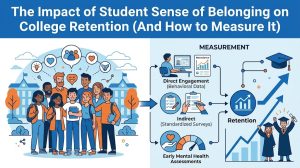
The Impact of Student Sense of Belonging on College Retention (And How to Measure It)
A strong sense of belonging is having a major moment in higher education, and for good reason. While the feeling that you belong has always
Is your institution's latest data technology rollout feeling more like a failing relationship than a lasting partnership? You are not alone. In this episode, Debbie Phelps sits down with John Ingram, Assistant Director of Institutional Research at Delaware Valley University and a chapter author of the upcoming book Priority Partners: Turning Vendor Spending into Mission Strengths.
John and Debbie dive deep into the often-overlooked "Effectiveness Equation" of vendor management in higher education. Using a highly relatable dating analogy, they explore why technical success does not always equal operational success.
Together, they unpack how institutions can show up as better partners by defining success early, prioritizing data governance, and understanding that lasting alignment — not just flashy tools — is the true foundation of a multi-year tech "marriage."
00:38Thank you for joining me today for another episode of Data Stakes, where I have conversations with professionals who work directly in the institutional research or effectiveness field, or are data adjacent in their role in higher education. Today's conversation will focus on the importance of managing vendor relationships to support institutional research and effectiveness on campus. My guest today is John Ingram. John is the Assistant Director of Institutional Research at Delaware Valley University in Doylestown, Pennsylvania. John is also the Principal Consultant with Ingram Market Analytics. And in that role, he is a chapter author for Dr. Christina Power's new book, Priority Partners, Turning Vendor Spending into Mission Strengths. So John, it's great to have you on. We've known each other because of activities through AIR, because of your membership in our Data Analytics Alliance, and it's really great to talk with you one-to-one today. So let's start out with a rather broad but important question. How can institutions be a good partner?
01:39Thank you. Well, first, thank you for having me, Debbie. It's quite an opportunity to get a chance to talk with you. And I think the question you're asked gets to what led me to focus on this vendor relationship in the first place. Over time, I've started to see both sides of these partnerships. I've spent 20 years working in colleges, universities, and about 10 years consulting. So I've seen how this plays out from both sides. From the institution side, there's a lot of pressure, competing priorities, evolving definitions, sometimes unclear ownership of the work. And then the vendor side, being a consultant, there's a need to deliver, stay within scope or budget, and interpret what the institution's asking for. And what I kept seeing, was that when things didn't go well, it usually wasn't because people weren't trying or didn't care. And it was because those two sides weren't fully aligned in how they define success and how work actually gets done. So I saw a real need for something that helps both sides step back and get aligned. So when you ask me about how institutions can be a good partner, But what I've seen, it's less about managing the vendor, but more about how the institution shows up. The strongest ones are clear, consistent, and self-aware. They understand their goals, communicate them clearly, recognize their own internal processes that still might be evolving. So when things tend to break down, is when institutions expect vendors to compensate for internal ambiguity, unclear ownership, or shifting priorities. So being a good partner really comes down to those perennial items such as clarity, consistency, and shared accountability. You know, I've worked at institutions like that and you really see a difference. They're clear on what success looks like. They establish ownership early. They stay engaged throughout the work. And in the chapter that I wrote, I described this more formally as the effectiveness equation. The idea is that outcomes are not just driven by the vendor or technology, but they're driven by alignment, shared understanding, and how the work is actually carried out on both sides. When one part of the equation is off, then even strong tools or vendors can't fully compensate. You know, I could talk for this on Days on End, but I know you probably have more questions.
04:31Okay, but that is great and you are so right and later in the conversation I can share a little bit about how I've now been on both sides as the institutional partner and as now a third party vendor. So we had an earlier conversation to prep for today's episode and you mentioned the need for institutions to identify success even before selecting.
04:45Great.
04:57A third party partner. Can you talk more about that, how you define success, and maybe some tips for what they should do?
05:06Yeah, and that's something I've seen play out in practice. About 10 years ago, I was part of a team that was implementing a new data system. On paper, implementation looked successful. The reports were being delivered. Everything was technically in place. But in reality, the data wasn't accurate. So the team ended up absorbing a lot of the manual work, validating the information just to make it usable. So the system worked, but the outcome didn't. And I'm sure a lot of people listening today have been in a situation like that. Now, I sometimes describe those early stages in the chapter as dating the vendor. I mean, Debbie, I want to take people back to their first dates for the second time. Everybody's on their best behavior, right? Demos look polished, conversations are positive, expectations are high. We've all been in that situation. And I imagine in your time at Cowley College, you probably saw some of that as well, right?
06:13Yeah, yes.
06:14Where everything feels aligned. But the real test comes later when work actually starts and those expectations meet reality. That's really the gap I'm talking about when I say institution needed to find success before selecting a partner. Too often success is framed in those, you know, items on the contract, deliverables, the dashboards. But internally, success is really about people who can use the outputs, who know their decisions are improving from the work and whether they can trust the data. If those definitions aren't aligned early, you can end up with a project that's technically successful that feels like a failure. When success clearly isn't defined upfront, vendors don't fail, they optimize, right?
07:04Yeah, yes, so true. And you're right. I've been through one computer transition, one system that was fun. You know that. And then you mentioned my time at Cowley College. we instituted Tableau Analytics for the campus. And one of the things that I think really
07:12Yes. Okay.
07:25Impacted knowledge on campus was my colleagues outside the data office realized how important data literacy and data governance were. Those are really the underpinnings because I had warned them that the first thing they might notice was bad results in the dashboard. And those were driven by data that maybe wasn't formatted consistently. And like you said, that was not the vendor's fault. And I really didn't feel like it was my colleague's fault. It was simply, you don't know what you don't know.
07:52Thanks. Thanks.
08:00But it's just like you trying to frame this in the idea of a dating relationship. There are responsibilities on both sides and willingness to take ownership and willingness to adapt and change. Admit that, hey, maybe this new partnership is revealing some things about my work that I wasn't aware of earlier and I need to change.
08:08Yeah, right? And you want to go on that second and third and fourth date and that takes work, right? And you don't know what you don't know about yourself. And you know, the same thing falls in line with working with a vendor exactly. Yeah.
08:27That's right. Yeah. Yeah, yeah, I would say the the end John is we all want to go to prom because I know when I rolled tableau out I wanted that to be the shiniest fanciest thing to me that's not a second or third date that's prom that's what we want.
08:43Hahaha, yes. Yeah! I love that. I love that.
08:56Okay, so in your chapter you write about several lenses to view the project through and they were what's on paper and what's really happening. Can you explain more about this to our listeners?
09:11Yeah, that's a great question. And I'll come at it by providing some examples. And I can think of two examples that come to mind. The first project was where on paper, everything looked like it was working. The reports were being delivered, timelines were being met, and from the outside, it looked successful.
09:18Great. Okay.
09:33But when we step back, we realize institutions team was spending a lot of time validating those data, rewriting outputs and coordinating across departments just to make those reports usable. So what we did is we did a pause where we reset expectations. We went back and clarified what success really meant, not just delivering reports, but having data that people could trust and use. keeping in mind what you referred to earlier about data governance. So that was the conversation. was far better to have that explicit conversation to invest that time in the data governance. And we also decided that perhaps maybe the vendor wasn't showing up to the party. in better understanding the institution's data definitions and the context behind them, rather relying on the institution to fill those gaps. And that can develop a level of fatigue from the institution of having to re-explain or retrain where they're feeling like they're not making any progress. But once all of that was clear, it all shifted. The vendor took on a bigger role validating an understanding and the amount of rework on the institution side started to decrease. And one ways I've seen vendors get better at that over time is by using advisory groups that are separate from any one client. I've been a part of those and they really help vendors understand how institutions actually operate. Things like the academic calendar. When is the best time to do an implementation of like Tableau or a system? Because you know there are competing priorities at certain times of the year. And how to build buy-in across campus, especially with faculty, which can be a sticky widget, not just staff. So it's often that gap, not the tool, understanding how institution actually works.
11:13Right.
11:31And then the second example is a little different. It doesn't deal with data, but more about expectations. The institution selected a solution that looked like a great fit. Capabilities were there and the expectations were high and everybody was aligned and what the tool could do. But once we got started, the mismatch between what people expected and what was actually feasible. Not because the tool was bad, but the expectations weren't grounded in how the actually the institution could operate. So we step back, we reset the conversation. again clarifying what success could look like in the near term, and went back and adjusted the scope. And once that happened, the tension dropped pretty quickly. You know, we're all in this to make it a successful outcome.
12:23Right.
12:23But if there's situations where it just seems it's not going well. And I've seen that I've been a foot soldier in those implementations. I'm not the one signing on the dotted line. And sometimes it's helpful to have that stakeholder listening in in those meetings. So if it does feel like it's going off course, they can step in, not in the engagement meetings, but on a side conversation with leading stakeholders. What are your thoughts on that? You're race shaking your head on that.
12:56Yeah, well, yes. One thing that you didn't point out was you mentioned the stakeholder, the person to the side listening in. think part of that, though, is whoever the lead is for your institution has to be willing to listen to that. They have to be
13:01Yeah. Yeah.
13:18This is tip anything that you typically roll out for the IR the IE office is not just the the office's staff. It's it impacts many areas on campus and it's really impossible for the IR lead to know everything.
13:37Thanks.
13:38And so, you you mentioned the important context and also the listening, especially in the also going back to the first example, what if you build something and the office that you built it for says, wow, I thought I would love this. And I don't. So is that failure?
13:44Yeah.
13:58I would say no, as long as you're willing to listen, as long as you're willing to adapt the solution that you built, and as long, I would say, as you're willing to turn ownership over. You know, I know with the... the work that I did at Kelly College when we partnered with Datatelligent, it was the ability to turn over the reins, to step back and say, yay, we built it, now let's make it yours, which sometimes meant I had to step back from things I thought they should care about or I thought were successful, but maybe they didn't. So I think going back again to the whole dating thing, it's all about relationships. It's all about relationships, isn't it?
14:38Thing. yes! It is, it really is. And I think we level set it, Debbie and I, by talking about it with examples of things that everybody's experienced, those first dates, right? And I think you ground yourself into that. Early on, I talked about how exciting it can be to get this vendor on board. you know through an RFP process or whatever vetting process and you're excited, but you've got to remember think about this our audience as that first date and working through to get to prom, right? Yes
15:17Right. That's the goal. So, okay, so what we're talking about right now is challenges. So typically there are challenges that arise during any type of project. And we're both aware that many projects that originate in the data office, they're not short. They're usually multi-year, you know, a year or longer. So what advice do you have for working through the challenges
15:23Yes.
15:44That can arise and how to repair a vendor relationship before it becomes damaged during the project.
15:53That's a really good question. It really strikes at the chapter that I wrote in Dr. Powers book is is this sense that things are not going as well and everybody's invested. And how do you get that? Get it back on track. How do you repair it? I think that's where it becomes much more challenging. In one case. I was brought in as a consultant where communication really broke down between the institution and the vendor. Meetings were happening, updates were being shared, but both sides were leaving with different understandings of what actually should be decided. So over time, frustration was created because work wasn't aligning and things were being missed. And so there was a lot of activity, but not a lot of progress. And a lot of times these breakdowns aren't technical. It's because they're not fully understanding the institutional environment. And I think once you've sat in both seats, you start to realize there's a lot of these breakdowns are usually caused by bad intentions. And I think you probably have a unique perspective on this too, as you said earlier, because you've been on both sides. of the relationship first in IE lead on a campus and now working with the Datatelligent team. So certainly I'm sure you have some insight into that.
17:16Yeah, yeah, so One of the reasons that I did move out of the higher end space and into more of a support role was because I'd really never worked with a third party vendor where the vendor was interested in creating the type of relationship that you're talking about in your book. And one of the most important things to me when we started partnering with them back in 2020 was was their interest in learning as much as they could about higher education, about my institution, about how things worked. And I would say that was really a big foundation for the success of everything that, you know, that we accomplished together because we had a lot of, you know, conversations that went deep into context. The engineers that we worked with, I almost feel like they understand our gens of our system now better than I do. And you don't always, you don't always find that.
18:10Yeah.
18:21You know, with a vendor. Also, we had regular conversations.
18:22Right.
18:27That's what I love about working for Datatelligent is we have regularly scheduled meetings with our customers even when we move into a support contract. We're still there talking about how is it going? How can we help you manage it? Is there anything we can do to support, you know, improvement? And that was unique when compared to say the computer transition that I went through at one time, it was even a bit different when we created the data analytics solutions. So yeah, I've been there and I'm pretty happy to be on the other side of the table, but I understand the needs of people like you still working in higher ed.
19:13And what a great example of how a successful relationship, what it looks like. And I go into my chapter talking about examples of where the situations are misaligned and where they're aligned. And you've really highlighted that because a lot of vendors or at least institutions feel like they're not doing the unglamorous homework of learning their Gens of R system or whatever ERP system. And so in your example, that's the way it should work. In the example of what I worked with as a consultant, we had to step back and kind of reset how communications decisions were being made. And luckily I was there and I'm hoping the information in the chapter that I wrote will be a tool for a lot of people who are in working with vendors or even renewing their contract. What I have in the chapter is this framework called the Effectivis Canvas. It is a tool where you can actually evaluate both you and the vendor, your relationship, and defined in four different areas, roles, data, communication, know, hidden work. Because once you make those things visible, the... to fixing the relationships become much more cleaner. And ultimately, that's what this comes back to. It's just not about the tool, but it's about the alignment. This canvas, if it's helpful to your listeners, I put a version on my website, ingrammarketanalytics.com, so people can actually use it where their team. And if the topic resonates, feel free to reach out to
20:57Great.
21:04Me on LinkedIn. I share a lot of work on this as well. And I'll also be at AIR Forum at the end of this month in DC. So if you see me, feel free to say hello.
21:14I will and yeah, that is a great idea for listeners because I'm sure many of the people that do listen to our podcast are members of AIR and hopefully they will be at forum. And I really appreciate you sharing that tool because it's very practical. I think that also if you're involved in accreditation on your campus, that would be a key piece of evidence.
21:39Yeah.
21:39In your accreditation argument, regardless of who your accreditor is. This is terrific.
21:44Yeah. Great suggestion.
21:48Many institutions are currently making big changes to data analytics strategies. And I don't know if you saw it, but back in January, there was an article in Inside Higher Ed. And there was a significant percentage of chief technology officers who were surveyed and expressed doubts about the investments their campuses had made in technology over the last 10 years. And so when we're thinking about setting up a data lake, or a warehouse or moving into AI enhanced analytics. Those are significant investments and we don't want our listeners to come back 10 years into the future and say, know, this really didn't work out. This relationship didn't yield a product that we're using and now we have to start again. So let's close with your top piece of advice to IR &IE leads who might need to create the perfect vendor relationship to accomplish their next multi-year project.
22:51That's a tall order, but that's where the pressure is, right? That's where you get the conversations in the hallway after the engagement meeting with the vendor of, how are we going to pull this off? Do they really understand our data? And my biggest advice for IR, IE leaders is this, don't start with the technology, start with the alignment, right?
22:53Yeah. Right.
23:19Because it's very easy to get excited about the dashboards and the AI tools and those data lakes. But if institutions aren't clearly defined, the ownership, the decision-making, the governance, as you referred to earlier, and putting pencil to paper for them to decide what success looks like to them, right, before having the conversation with the vendor. those problems can scale into a bigger environment exponentially. And I think a lot of people in IR probably have experienced this, right? Where technology itself may be working fine, but operationally, because the definitions aren't aligned, the data isn't there, and departments are still operating independently. So institutions are selecting long-term partners for these kinds of initiatives. And maybe we expand on our dating and prom and maybe it's about the big ask, you know, of engagement, know, engaging a vendor just like you would in a relationship to get to that point. So you really want partners like Datatelligent that understand how the institution operates and they're willing to learn that as part of the process, not just implement. technology.
24:42Agreed, agreed. The first question, really, you're right. It isn't about data. It's really, it's about culture. It's about whether you have what I call a knowledge management culture, which is much more than the data. And I love the example you just gave about the engagement because, you know,
24:48Yeah. Mm-hmm.
25:04We make decisions and invest significant resources in technology infrastructure for our campuses. And so really before embarking into a purchase, maybe we should ask ourselves if we see a long-term marriage with this vendor, you know?
25:24Yes. Yes.
25:26Because it's, you you don't purchase an ERP, you don't move to the cloud, you don't buy hundreds of Tableau licenses unless you're committing to a long-term relationship. And so you have to be able to look into the future and then create the type of relationship you're talking about in your book to give it that rosy future, even beyond the honeymoon.
25:50Yes.
25:51John, it was great to have you on as a guest for this episode. So thank you for all the thoughtful work you invested in what can be a sticky task for some leads in the campus IR &IE office. And listeners, the title, Priority Partners Turning Vendor Spending into Mission Strength, will be able to purchase during the summer of 2026. So if you're not already following John, you're not already following Dr. Christina Powers,
25:53Yes, loved it.
26:19And you have this type of responsibility in your roles, I really encourage you to go to LinkedIn and follow them and then maybe connect too to have a deeper conversation. And hey listeners, thanks for joining us for another episode of Data Stakes. Data Stakes is sponsored by the Data Analytics Alliance for Higher Education. You can visit our website to learn more about our upcoming quarterly meetings. And if you have any questions about today's conversation, don't hesitate to reach out to me at dfelps at Datatelligent.ai. See you next time!

A strong sense of belonging is having a major moment in higher education, and for good reason. While the feeling that you belong has always